
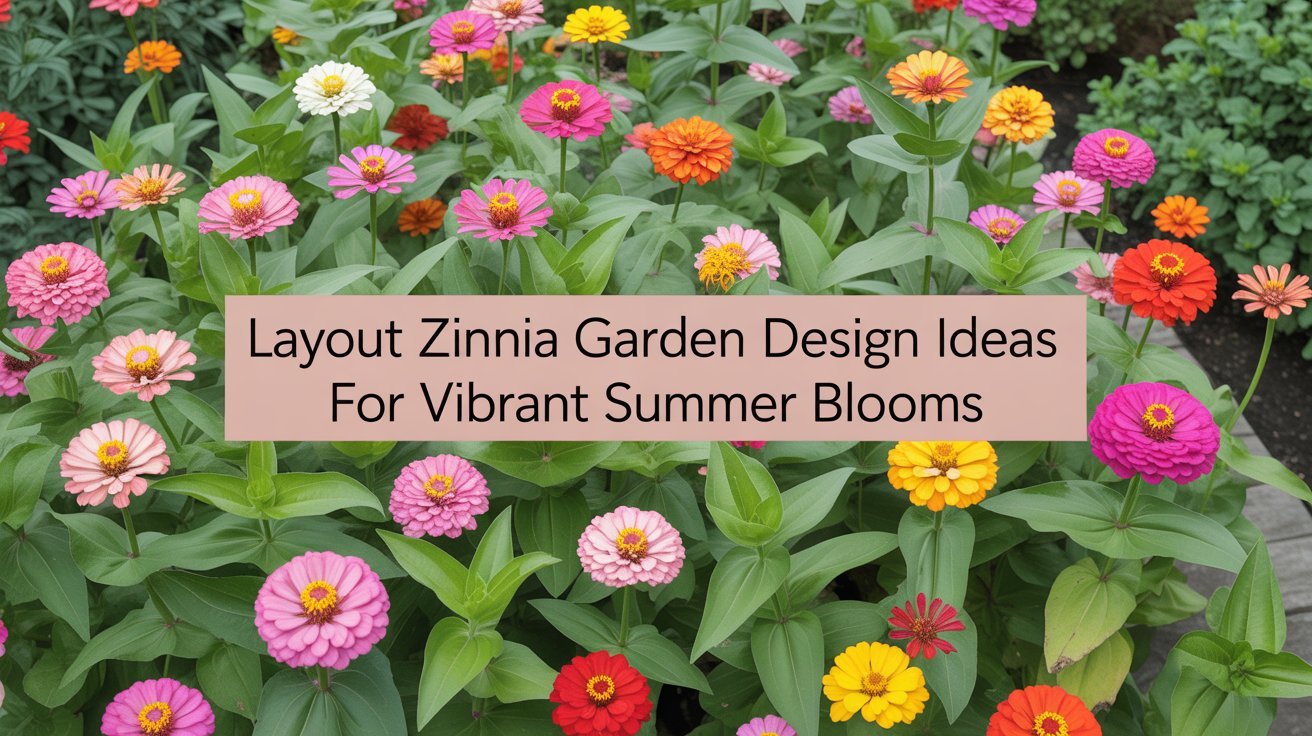

Zinnias bring bright colors to any garden with very little work. These cheerful flowers come in almost every color you can think of, from soft pastels to bold reds and oranges. They grow fast, bloom for months, and look great in many different garden styles.
A good layout zinnia garden design can turn a plain space into something special. The key is knowing how to arrange these flowers based on their height, color, and how much room they need.
In this guide, you’ll learn how to plan your zinnia garden from start to finish. We’ll cover spacing rules, height tips, and seven creative layout ideas you can copy. By the end, you’ll know exactly how to create a zinnia garden that looks amazing all summer long.
Planning Your Zinnia Garden Layout

Getting your layout, zinnia garden design, right starts with good planning. Taking time to think about spacing, height, and sunlight will help your zinnias grow strong and healthy.
Key design principles for zinnia gardens
Before you plant a single seed, understand what zinnias need. These flowers love full sun, so pick a spot that gets at least 6 to 8 hours of direct sunlight daily.
- Dwarf varieties need 6 to 12 inches between plants
- Medium-sized zinnias do best with 12 to 15 inches of space
- Tall varieties need 15 to 18 inches to spread out properly
- Height ranges from 6-inch plants to 4-foot giants
- Always check your seed packet for specific spacing rules
Proper spacing lets air move between plants, which prevents diseases.
Essential planning steps
Start by measuring your garden bed. Use a tape measure to get exact numbers for length and width. Pick varieties based on what you want and their mature heights.
- Draw a simple sketch showing where each variety goes
- Mark tall plants for the back or center
- Put shorter ones in front or on the edges
- Plan for succession planting by leaving some empty spots
- Think about which colors you want next to each other
Layout fundamentals
Put tall flowers where they won’t block shorter ones. In a border against a fence, tall zinnias go in back. For beds you can walk around, put the tallest ones in the middle. Create smooth height flow from front to back. Group colors together for impact, or mix them for a natural look. Always leave room to walk between plants for maintenance.
Creative Zinnia Garden Design Ideas
These seven layout ideas work for gardens of any size. Pick one that fits your space and style.
1. Row Planting for Cutting Gardens

This is the simplest layout zinnia garden design for people who want lots of cut flowers. Plant zinnias in straight rows with space to walk between each row.
Space rows 18 to 24 inches apart so you can reach in from both sides. Put one variety in each row, or organize rows by height. The Benary’s Giant series works perfectly for this style. Row planting makes watering and weeding much faster than other layouts.
2. Mixed Height Border Design

Borders look best when you layer plants by height. Start with dwarf varieties like Thumbelina or Zahara in front, staying under 12 inches tall.
In the middle, plant medium types like Cupcakes or Zinderella at 18 to 24 inches tall. The back holds tall varieties like Benary’s Giant or State Fair at 3 to 4 feet. This layering makes even narrow borders look deep and full.
3. Color Block Arrangements

For bold impact, plant large groups of the same color together. Plant at least 9 to 12 plants of one color in a square or rectangle. Make several blocks of different colors next to each other.
Try complementary colors side by side, like purple next to yellow or orange next to pink. Color blocking works great with the Dreamland or Zinderella series. This layout zinnia garden design looks especially good in modern gardens.
4. Cottage Garden Style Layout

For a relaxed feel, forget straight lines and perfect spacing. Mix different heights and colors throughout the bed without a set pattern.
Let plants touch and overlap a bit for a full look. Leave some areas open for zinnias to drop seeds and return next year. Mix in other cottage favorites like cosmos or herbs between zinnia groups for a cozy, informal feeling.
5. Container Garden Combinations

Zinnias grow great in pots, giving you a flexible layout zinnia garden design. Choose dwarf or medium varieties for containers since tall ones get top-heavy.
Use one large pot as a focal point or group several smaller pots at different heights. Mix zinnias with trailing plants like sweet potato vine around the edges. Pots let you test different color combinations easily.
6. Zigzag Pattern Planting

Add movement by planting in diagonal zigzag lines instead of straight rows. Start at one corner and plant a diagonal line across to the opposite side.
Then plant another diagonal going the other way, creating a zigzag pattern. Alternate colors with each diagonal line for maximum effect. This works especially well in narrow beds along driveways or sidewalks.
7. Circular Island Bed Design

Round beds work perfectly for spots where people see the garden from all sides. Put your tallest zinnias right in the center.
Then plant rings of shorter varieties as you move toward the edge. The outer ring should be dwarf types under 12 inches tall. A 4 to 5-foot diameter circle works well for most yards.
Essential Tips for Successful Zinnia Garden Layouts
Follow these tips to keep your zinnias healthy and blooming.
Don’t crowd your zinnias, even if the bed looks empty at first. Proper spacing lets air move between plants, which stops diseases. Always follow the spacing guide on your seed packet. Remember that tiny seedlings will grow much bigger.
- Plant new seeds every 2 to 3 weeks from late spring through mid-summer
- This gives you fresh flowers opening all season long
- Early plantings may slow down in the August heat
- Later plantings take over as older plants fade
- Succession planting means nonstop color from June through frost
- Plan paths or leave space to reach into beds
- Deadhead spent blooms weekly
- Make sure you can easily cut flowers for bouquets
- Check that your watering can reaches all areas
Conclusion
Creating a beautiful layout zinnia garden design is easier than you might think. These tough, colorful flowers forgive mistakes and reward you with months of blooms.
Start with one of the seven layouts in this guide, or combine ideas to make something your own. Remember the basic rules about spacing, height placement, and sun needs. Beyond that, feel free to experiment and have fun.
Zinnias are perfect for beginners because they grow fast and aren’t picky. If something doesn’t work this year, you’ll know what to change for next season.
Now is the time to start planning your own zinnia garden. Grab some paper, sketch out your space, and pick your favorite varieties. Take photos throughout the season to remember what worked well.
Frequently Asked Questions
How Many Zinnia Plants Do I Need for a Small Garden?
For a small 4-by-8-foot bed, you’ll need about 24 to 48 plants, depending on variety. Dwarf types spaced 8 inches apart need more plants, while tall varieties spaced 18 inches apart need fewer. Measure your bed’s square footage, then divide by the spacing requirement squared. Always buy a few extra seeds in case some don’t sprout.
Can I Mix Zinnias with Vegetables in My Garden?
Yes, zinnias work great in vegetable gardens. They bring in helpful insects like butterflies and bees that pollinate your vegetables. Plant them along edges or in corners where they won’t shade shorter vegetables. Zinnias make good companion plants for tomatoes, peppers, and cucumbers. The bright flowers make harvesting vegetables more fu,n too.
What’s the Best Time of Day to Water My Zinnia Garden?
Water zinnias early in the morning, ideally before 10 AM. This lets leaves dry off during the day, which stops fungal diseases. Morning watering also means less water lost to evaporation. Water the soil level rather than overhead to keep leaves dry. Zinnias need about 1 inch of water per week from rain or watering.
How Do I Keep My Zinnia Garden Blooming All Summer?
Cut flowers often and remove dead blooms at least once a week. The more you cut, the more new flowers the plant makes. Deadheading stops plants from making seeds, which ends blooming. Use clean, sharp scissors to cut stems back to the next leaf set. Feed plants with balanced fertilizer once a month. Plant new seeds every few weeks through mid-July for fresh plants.
Should I Use Mulch Around My Zinnia Plants?
Yes, a thin layer of mulch helps zinnia beds. It keeps weeds down, holds moisture in the soil, and keeps the soil cooler in summer heat. Use 1 to 2 inches of shredded bark, straw, or compost around plants. Keep mulch an inch away from stems to prevent rot. Apply fresh mulch each spring before plants get big.


