
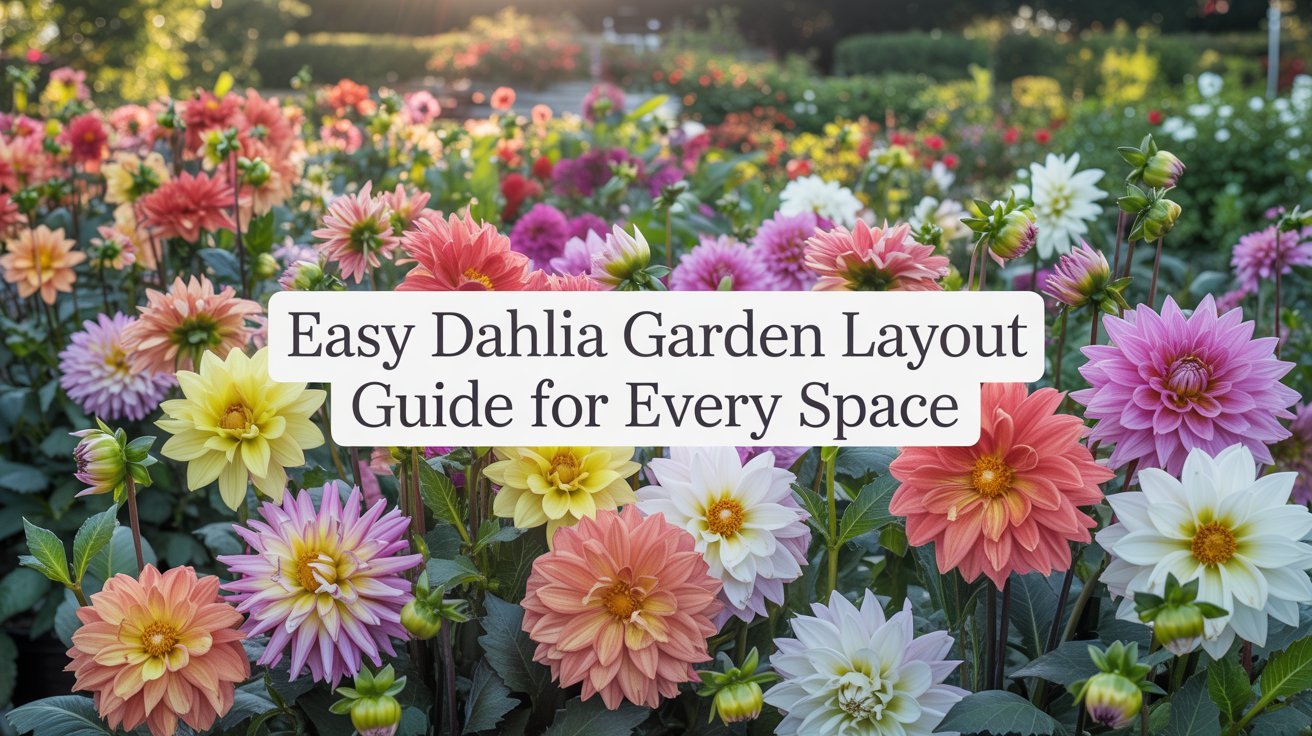

Planning your dahlia garden layout before you plant can make the difference between a messy patch and a thriving display.
Many new growers skip this step and end up with crowded plants, poor air circulation, and flowers that are hard to reach for cutting.
In this guide, you’ll learn how to calculate spacing, choose the best location, design your beds, and set up your garden for success.
By the end, you’ll have a clear plan for creating a functional and beautiful garden that produces plenty of blooms all season long.
Essential Spacing and Plot Calculations

Getting your spacing right is the foundation of any good dahlia garden layout. Each tuber needs 18 to 24 inches of space from its neighbors. This distance gives the plants room to grow without competing for nutrients, water, and sunlight.
Think of each dahlia plant as needing a growing circle with a 2-foot diameter minimum. A bed that measures 3 feet by 6 feet can hold about 8 dahlia tubers comfortably. If you have a 4 by 5 meter plot, you could plant up to 72 tubers with proper spacing between each one.
When designing your bed configuration, plan for rows that run in straight lines with walking paths between them. Leave at least 2 feet between rows so you have room to walk, water, deadhead spent blooms, and harvest flowers. Good airflow between plants keeps foliage dry and reduces the chance of disease taking hold in your garden.
Choosing the Right Location

Your dahlia garden layout starts with picking the right spot in your yard. Dahlias need full sun to produce their best blooms, which means at least 6 hours of direct sunlight each day. These plants are sun lovers and will grow tall, strong stems with plenty of flowers when they get enough light.
The ideal location can vary based on where you live. If you’re in a hot climate where summer temperatures regularly climb above 90 degrees, your dahlias might benefit from some afternoon shade. In cooler regions, you’ll want full sun all day long.
Check your soil drainage by digging a hole and filling it with water. If the water sits for more than a few hours, you’ll need to improve drainage or choose a different spot. Place your beds close to a water source to make watering easy. Also consider wind protection, as strong winds can snap tall dahlia stems.
Designing Your Bed Configuration

A smart bed design makes maintaining your dahlia garden layout much easier throughout the season. Create separate beds with pathways running between them rather than one large planting area. Most gardeners find that beds 3 to 4 feet wide work best because you can reach the center from either side.
Arrange your rows to run from north to south if possible. This orientation gives all plants equal sun exposure as the sun moves across the sky. Plan for at least 2 feet of pathway space between beds. You’ll need this room for wheelbarrows, watering cans, and comfortable movement when you’re working with your plants.
Place your tallest dahlia varieties at the back or north side of each bed. Medium height varieties go in the middle, and shorter plants belong in the front rows. Before planting day arrives, draw your dahlia garden layout in a notebook. Map out where each variety will go, noting the expected height and flower color of each one.
Color Coordination and Variety Selection

Planning colors for your dahlia garden layout adds another level of beauty to the space. Group flowers with similar or complementary colors together in the same bed. For example, plant all your pink and purple varieties in one area, warm yellows and oranges in another, and reds with burgundy in a third section.
Mix different flower forms within each color group to add interest. Dahlias come in many shapes, including decorative, cactus, ball, pompon, and anemone types. Combining these different forms in one bed keeps the display from looking too uniform or boring.
Choose varieties with different bloom times to keep color in your garden from early summer through fall. Some dahlias start flowering in June, while others peak in August or September. Balance the heights within each bed section as well, so no area looks overcrowded while other sections look sparse.
Preparing Your Space for Planting

Once you’ve planned your dahlia garden layout on paper, it’s time to prepare the actual ground. Add about 4 inches of compost-rich soil on top of your existing dirt. Work this organic matter into the top 8 to 12 inches of soil using a garden fork or tiller.
If you have heavy clay soil, mix in coarse sand along with the compost. This improves drainage so water doesn’t pool around the tubers. Check your local frost dates before finalizing when to plant, as dahlias are sensitive to cold.
Mark the exact position of each tuber using stakes, stones, or flour sprinkled on the ground. This helps you maintain proper spacing and stick to your color plan. Consider installing support structures like tomato cages or stakes before you plant, as it’s much easier to set these up in empty beds.
Tips for a Successful Dahlia Garden Layout

Following a few practical tips will help your dahlia garden layout come together smoothly. These suggestions come from experienced growers who have learned what works through years of trial and error.
- Use wooden stakes or bright markers to visualize spacing before you put any tubers in the ground.
- Install tomato cages or support netting right after planting, while the soil is still easy to work with
- Keep a detailed map in your garden journal showing which varieties went where
- Leave plenty of room for walking and reaching every plant
- Talk with local dahlia growers in your area for climate-specific advice
- Start small if you’re new to growing these flowers, perhaps with one 3-by-6-foot bed
These simple practices help prevent common problems and make gardening more enjoyable. A little planning before planting saves frustration later when your plants are actively growing.
Conclusion
A thoughtful dahlia garden layout sets you up for months of beautiful blooms and healthy plants. Taking time to plan your spacing, choose the right location, and design functional beds pays off when your garden fills with color.
Start designing your layout now, even if planting season is still weeks away. Measure your available space, order your tubers, and draw your plan.
The effort you put into planning creates a garden that’s both practical and full of beauty. Soon you’ll be cutting armfuls of fresh flowers and enjoying the results of your careful preparation.
Frequently Asked Questions
Can I plant dahlias in containers instead of garden beds?
Yes, dahlias grow well in containers that are at least 12 inches deep and wide. Use one tuber per large pot. Container dahlias need more frequent watering than garden plants and may not grow as tall.
How do I prevent overcrowding as dahlias grow throughout the season?
Proper spacing at planting time prevents most crowding issues. Space tubers 18 to 24 inches apart from the start. You can also pinch back some stems or remove a few if plants grow larger than expected.
Should I plant all one variety or mix different types?
Both approaches work well. Single-variety beds create a uniform look and make great cutting gardens. Mixed plantings offer more visual interest and longer bloom times by combining early and late flowering types.
What’s the minimum bed size needed to start growing dahlias?
A bed measuring 3 feet by 6 feet is a good starting size. This space fits 6 to 8 plants comfortably with proper spacing and gives you enough flowers to enjoy without being overwhelming to maintain.
How far should dahlia beds be from trees and shrubs?
Keep beds at least 6 to 8 feet away from trees and large shrubs. Tree roots compete for water and nutrients, while branches can create too much shade. This distance protects your dahlias from both problems.


