
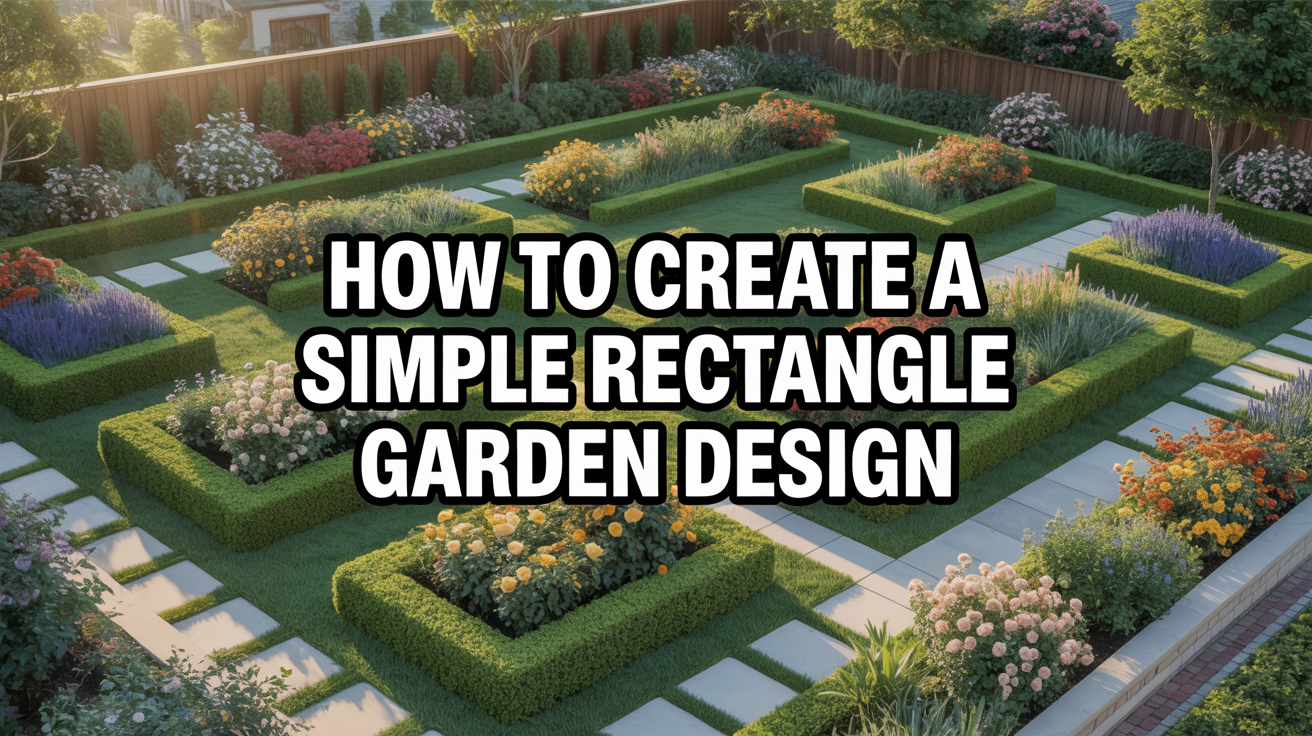

Looking to design a rectangular garden, but don’t know where to start? You’re in the right place. This guide walks you through creating a simple rectangle garden design that actually works.
No fancy terms or complicated plans, just practical steps anyone can follow.
I’ve helped dozens of gardeners plan their spaces over the years, and I can tell you this: the rectangular shape is perfect for beginners.
It’s easy to measure, simple to organize, and makes the most of your yard. You’ll learn all about gardening.
The best part? You don’t need special skills or expensive tools. Just a measuring tape, some stakes, and a weekend afternoon.
By the end of this article, you’ll have a clear plan ready to go. Let’s turn that empty patch of yard into the garden you’ve been picturing.
Understanding Your Rectangle Space

Before you plant a single seed, you need to really know your space. Grab your measuring tape and get the exact length and width.
Write these numbers down. Watch how sunlight moves across your rectangle throughout the day. Does morning sun hit the left side? Does the back stay shaded? Check for anything permanent like fences, patios, or sheds. You’ll design around them.
What do you actually want from this garden? A quiet reading spot? A place where kids can pick tomatoes? Rows of colorful flowers? Your answer changes everything.
A relaxation garden needs different features than a vegetable garden or flower showcase.
Think about movement too. Where will people walk? Do you need a central path or side access?
Answer these questions now, and your layout practically designs itself. I’ve watched gardeners waste entire weekends redoing plans because they skipped this step.
Planning the Perfect Layout
Now comes the fun part, deciding where everything goes. I always sketch this out on paper first, even if it’s just a rough drawing.
You don’t need fancy software. A pencil, ruler, and piece of graph paper work perfectly fine.
Divide the Space into Functional Zones

Think of your rectangle in three sections: front, middle, and back. Each zone serves a different purpose. The front is what people see first, so make it count.
- Front section: Eye-catching plants, decorative stones, or a welcoming border
- Middle area: Open lawn, wide pathway, or functional movement space
- Back section: Seating nook, raised veggie beds, or privacy plantings
The middle stays open for walking or playing. The back is your private zone where I put seating areas or vegetable patches.
Don’t overthink this, the zones naturally guide how you’ll use the space.
Maintain Balance and Flow

Straight lines are your friend in a rectangular garden. Run your main path along the long axis, it creates natural harmony.
Use stepping stones or gravel to guide people through.
- Align paths with the long side of your rectangle for the best flow
- Add stepping stones in a straight line to guide the eye naturally
- Soften hard edges with gentle curves in your plant borders
Want to soften those rigid edges? Add gentle curves with your plant borders or a slightly winding side path. Just keep the main structure straight so your rectangle doesn’t feel awkward.
Add a Central or Offset Focal Point

Every good garden needs something that catches your eye. A small fountain, colorful pot, young tree, or garden sculpture works perfectly.
Position it where it draws attention without blocking your pathway.
- Water features: Small fountains or birdbaths work great
- Garden art: Sculptures, decorative pots, or colorful stakes
- Living focal points: Specimen trees or large ornamental grasses
I usually place focal points slightly off-center, one-third of the way down your rectangle rather than dead center. This simple trick adds depth and makes your garden feel professionally designed without the designer price tag.
Designing with Structure and Shape
A flat garden is a boring garden. The secret to making your rectangle look amazing is thinking in layers.
I learned this the hard way after planting everything the same height in my first garden. It looked like a green pancake.
Create Layers for Depth

Plant in three height levels from back to front. Your tallest plants go in the back, medium heights in the middle, and short ones up front.
This simple trick makes your garden look three times bigger than it actually is.
- Back layer: Tall shrubs, climbing vines on trellises, or privacy hedges
- Middle layer: Perennials like dahlias, salvia, or coneflowers
- Front layer: Low groundcovers like alyssum, creeping thyme, or sweet woodruff
Think of it like stadium seating, every plant gets its moment to shine. Nobody’s blocking anyone else. This layering adds texture and keeps your garden from looking flat and lifeless.
Define Edges and Boundaries

Clean edges make everything look intentional. I use brick edging around my beds because it’s cheap and lasts forever.
Gravel works too if you want a softer look. Low hedges are prettier but need trimming.
- Brick or stone edging: Durable and maintains clean lines
- Gravel borders: Easy to install and works with any style
- Low hedges: Beautiful but require regular maintenance
Straight lines emphasize that crisp rectangle shape. Want to soften things up? Add subtle curves along one side.
Just don’t go crazy with the curves, you’re working with a rectangle, not a kidney bean.
Keep Pathways Practical and Inviting

Your paths need to actually take you somewhere useful. Don’t just add a path because it looks nice in pictures.
Connect your zones with clear routes that make sense for how you move through the space.
- Gravel paths: Rustic feel, good drainage, budget-friendly
- Stepping stones: Modern look, easy to install yourself
- Brick pavers: Classic style, solid and permanent
Match your path material to your garden’s vibe. Gravel for cottage gardens. Sleek pavers for modern spaces.
Weathered stone for rustic designs. Whatever you pick, make sure it’s at least two feet wide so you’re not doing a tightrope walk with your watering can.
Choosing Plants for a Simple Rectangle Garden

Think about height like you’re arranging a group photo. Tall plants stand in back, short ones kneel in front.
This isn’t just about visibility, it creates a natural flow that guides your eye through the garden.
- Focus on Harmony and Height: Mix plant sizes for balance, place tall sunflowers and hollyhocks in back, medium lavender and black-eyed Susans in the middle, low creeping jenny and alyssum up front, then repeat the same plants in groups of three or five throughout your rectangle for visual rhythm.
- Color Themes and Seasonal Variety: Choose 2-3 core colors and plan for year-round interest, pick a cohesive palette like purple and white, plant tulips for spring and coneflowers for summer, then add evergreens like boxwoods or ornamental grasses for winter structure when everything else dies back.
- Low-Maintenance Choices: Choose drought-tolerant perennials and native plants lavender, sedum, Russian sage, black-eyed Susans, and native grasses that survive on rainfall alone, return every year without replanting, and thrive naturally in your climate without constant attention.
Design Ideas Based on Garden Size

Not all rectangular gardens are created equal. What works in a tiny backyard won’t work in a sprawling space.
I’ve designed both, and the approach changes completely depending on your square footage.
- Small Rectangle Garden: Use vertical gardening with trellises and wall planters, choose compact furniture with light-colored paving, and add diagonal paths to visually expand the area.
- Medium Rectangle Garden: Combine a small lawn with side borders and a central feature, create symmetry using twin flowerbeds or parallel paths, and add seating to one corner for balance.
- Large Rectangle Garden: Divide into distinct “rooms” with hedges or pathways, add a long central axis with repeating plants, and use trees or pergolas to frame distant views.
Styling Inspiration: Match Your Garden to Your Taste

Your rectangular garden should feel like you. I’ve seen people copy designs from magazines that don’t match their personality at all.
The result? A garden they never actually enjoy spending time in.
- Modern Minimalist: Use clean lines with concrete or slate paving and evergreen shrubs, keep plant colors simple with greens, whites, and silvers, and choose minimal furniture for a sleek, low-maintenance look.
- Cottage-Style Rectangle Garden: Fill borders with overflowing mixed flowers and herbs, add stepping-stone paths and rustic wood features, and blend colors freely for natural charm and appeal.
- Classic Formal Design: Create symmetrical layouts with straight pathways and clipped box hedges, add a central fountain or sundial for timeless balance and traditional elegance.
Maintenance Tips for Long-Lasting Beauty
A beautiful garden stays beautiful with regular care. But here’s the thing, maintenance doesn’t have to eat up your entire weekend.
I spend maybe 30 minutes a week on my rectangular garden during the growing season, and it looks great.
- Prune regularly: Set aside one morning a month to snip dead flowers, trim unruly branches, and shape hedges to maintain clean lines and healthy growth.
- Mulch your borders: Spread a 2-3 inch layer every spring to retain moisture, suppress weeds before they start, and give beds a finished look.
- Check soil health annually: Test your soil once a year with a cheap kit and amend with compost or fertilizer based on results for healthier plants.
- Rotate annuals seasonally: Swap spring pansies for summer petunias and fall mums to keep continuous color without replanting your entire garden each time.
- Protect plants in winter: Throw light sheets over tender plants during frost warnings or move potted specimens closer to the house for shelter.
Conclusion
Your simple rectangle garden design is closer than you think. You’ve got the measurements, the layout ideas, and the plant placement tips. Now it’s just about picking up that measuring tape and getting started.
Remember, the beauty of a rectangular garden is its simplicity. You don’t need to overthink it. Mark your corners, plan your rows, and give your plants room to breathe. That’s really all there is to it.
Start small if you need to. Even a modest rectangular garden can grow plenty of vegetables or create a beautiful flower display. Once you see how well it works, you can always expand next season. Got questions about your specific space? Drop a comment below, I’d love to help you figure it out.
Frequently Asked Questions
What is a simple rectangle garden design?
A simple rectangle garden design is a garden laid out in a rectangular shape with straight edges and organized rows. It’s the easiest garden style for beginners because it’s straightforward to measure, plan, and maintain. The design typically includes defined planting areas and clear pathways for easy access.
What size should my rectangular garden be?
Start with 4 4-foot by 8panelst for your first rectangle garden. This size is manageable and lets you reach the center without stepping on soil. You can always expand later. For larger spaces, keep the width under 4 feet so you can comfortably reach all plants from the sides.
How do I lay out a rectangular garden?
Mark your four corners with stakes and string to create straight lines. Divide the space into planting rows running lengthwise. Leave 12-18 inches between rows for walking and maintenance. Plan taller plants on the north side so they don’t shade shorter ones.
What plants work best in rectangular gardens?
Vegetables like tomatoes, lettuce, carrots, and beans thrive in rectangular gardens. For flowers, try marigolds, zinnias, and sunflowers. Choose plants with similar water and sun needs for each row. Group plants by height, tall in back, short in front, for best results.
Do I need raised beds for a rectangular garden?
No, raised beds aren’t required for a simple rectangle garden design. You can plant directly in the ground if your soil drains well. Raised beds help with poor soil or drainage issues, but flat rectangular gardens work perfectly fine and cost less to start.


