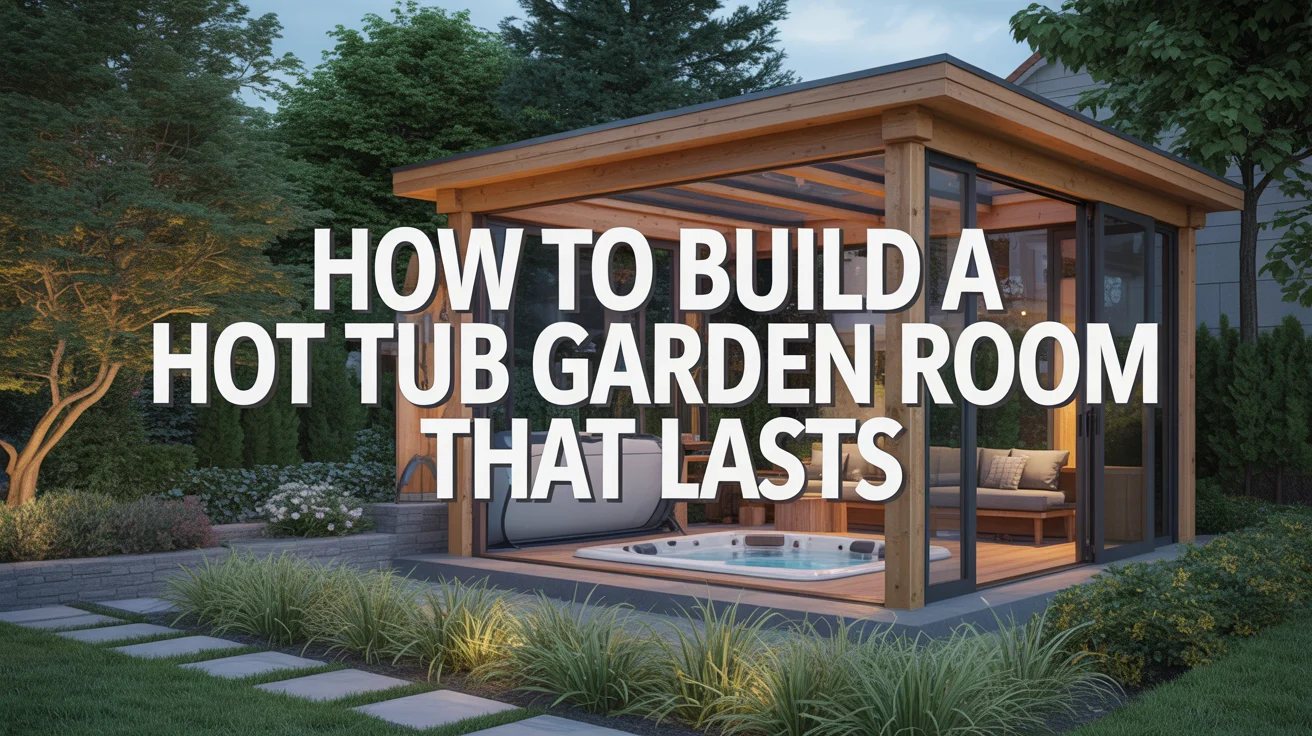

Spa memberships are expensive, outdoor tubs are uncomfortable in winter, and public spas lack privacy.
A well-built hot tub garden room solves these issues by giving you steady comfort, privacy, and no ongoing fees. Many builds fail early because people skip key steps and use the wrong materials.
I have reviewed long-lasting builds and short-lived ones to see what makes the difference. Rooms that hold up for years are planned correctly, use strong materials, and are built with care. Poor choices in the beginning lead to decay, leaks, and high repair costs.
This guide shows how to create a garden room that lasts for decades. You will learn about foundations, weather protection, airflow, and material options that prevent damage. The steps cover planning, building, and upkeep so your space stays safe and reliable.
Planning Your Hot Tub Garden Room
Planning prevents expensive mistakes. Get this stage right, and everything else becomes easier.
Assessing Your Space and Location

Choose your spot carefully. Proximity to your house matters for easier access and shorter utility runs.
Think about privacy from neighbours, view optimisation, ground conditions, sun exposure, and access for construction equipment.
Plan for additional space beyond the hot tub itself (typically 6-8 feet). You need room for a changing area, storage, and potential future additions like a sauna or a shower room. Check your yard after heavy rain. Where does water pool? That’s where you don’t want to build.
Building Regulations and Permits

Don’t skip this step. Most areas require permits for permanent structures. Local building codes cover safety regulations, electrical requirements, and setback distances from property lines.
You’ll need permits for electrical work, plumbing, and the structure itself. Hire a licensed electrician and plumber. This isn’t optional. Their work must pass inspection, and DIY electrical is illegal in most places.
Budget Planning and Design

A basic garden room with a standard hot tub costs $15,000-25,000. Mid-range builds with custom features run $25,000-50,000. High-end luxury projects exceed $50,000.
Budget for foundation, structure, hot tub purchase, electrical and plumbing, insulation, and ongoing maintenance.
Plan for 10-15% over your estimate. Projects always cost more than you expect. Phased construction saves money if you can’t afford everything at once.
Choosing Materials That Last
Material selection determines whether your garden room lasts 5 years or 50 years. This is where most people waste money or cut corners they shouldn’t.
Building Structure Materials
Cedar is naturally rot-resistant, aromatic, and beautiful. Alaskan yellow cedar is the premium choice for decking and structures. Both the last decades have had minimal maintenance.
Pressure-treated pine costs less but requires proper staining every 2-3 years. Composite materials offer low maintenance and long life. They cost more upfront but save time and money over 20 years.
Shou-sugi-ban is an ancient Japanese technique. You char the wood surface to increase water repellency and reduce fungal growth. This treatment adds years to wood’s lifespan and creates a textured appearance.
Flooring, Decking, and Hot Tub Selection
Composite decking by Fiberon and similar brands is maintenance-free and durable. Natural stone tiles work well for wet areas. Non-slip surfaces are essential for safety.
Fibreglass hot tubs are pre-formed and easier to install. They have smooth surfaces and lower maintenance needs. Custom cedar hot tubs offer a traditional Japanese style with an artistic, handcrafted appearance. They require more maintenance but deliver results.
A full hot tub weighs 3,000-6,000+ pounds when filled. Your foundation must handle this weight safely.
Roofing and Weatherproofing
Traditional pitched roofs provide the best weather protection. Proper insulation in the roof cavity prevents heat loss. Wide overhangs protect your walls from rain damage.
Cedar cladding gives a natural look that ages beautifully. Charred wood using shou-sugi-ban adds durability and water resistance. Both options provide long-lasting exterior protection.
Large glass panels maximise views and natural light. Strategic window placement balances light and privacy. Consider sliding doors for easy access to your garden.
Foundation and Base Construction
Your foundation determines everything else. Cheap out here and you’ll regret it for years.
Ground Preparation and Foundation Types
Remove all vegetation and debris. Level the ground properly and address drainage issues before you build. Compact the soil for stability.
Concrete slabs are most durable for permanent structures. Concrete footings with wooden frames work for lighter builds. Raised platforms solve problems on sloped yards. Never build on soft or poorly drained soil.
Drainage and Structural Support
A proper slope away from your structure prevents water damage. French drains around the perimeter channel water away. Your hot tub drainage line must slope correctly to your sewer or designated area.
Remember that the weight calculation: 3,000-6,000+ pounds for a full hot tub. Reinforced flooring is required for sunken installations. Proper joist spacing and additional support beams under the hot tub location are non-negotiable. Hire an engineer for load calculations if you’re unsure.
Building the Structure
Construction quality determines how long your garden room lasts. Follow building codes exactly.
Frame Construction and Insulation
Use a 2×4 or 2×6 stud, depending on local building code, with proper spacing at 16 or 24 inches on centre. Header beams go over all door and window openings. Check R-value requirements and install vapour barriers to prevent moisture damage.
Electric heaters work for winter use, while ceiling fans circulate air. Proper ventilation prevents condensation that causes mould and rot. Pay special attention around the hot tub area, where moisture levels are highest.
Electrical and Plumbing Installation
Hot tubs need dedicated 220V circuits. GFCI protection is required by code. Only licensed electricians should do this work. Weatherproof outlets and switches throughout. Lighting circuits for ambient, task, and accent lights.
Water supply lines must reach your hot tub. Drainage lines need a proper slope. Freeze protection is critical in cold climates. Backflow prevention devices keep your water supply safe. Install an outdoor spigot for easy filling.
Design Elements for Longevity
These features prevent the most common failures. Don’t skip them to save money.
Weather Protection and Ventilation
Proper roof pitch sheds water quickly. Wide overhangs protect your walls from rain. Quality roofing materials cost more but last 30+ years. Sealed windows and doors with good weatherstripping keep elements out.
Your hot tub needs a lockable cover. Insulated covers reduce heating costs significantly. UV-resistant materials prevent sun damage. Proper fit keeps debris out and heat in.
Ventilation prevents mould and mildew growth. It reduces condensation damage and extends the life of all materials.
Operable windows provide cross-ventilation. Ridge vents in the roof and soffit vents for air intake work together. Exhaust fans actively remove moisture.
Privacy and Security Features
Yew hedges create soft backdrops without blocking views. Dark fencing recedes visually. Strategic plant placement provides privacy without feeling closed in.
Lockable doors and windows are basic security. Motion-sensor lighting deters problems. Hot tub cover locks prevent accidents with children. Door alarms add an extra safety layer if kids can access the area.
Maintenance for Long-Term Durability
Regular maintenance prevents expensive repairs. Spend an hour monthly and avoid thousands in damage.
Hot Tub and Water Maintenance
Check water chemistry 2-3 times weekly. Test pH and sanitiser levels. Skim debris daily. Clean or replace filters monthly. Deep clean jets and surfaces every month.
Balance your water chemistry completely each month. Improper chemistry damages the hot tub shell and equipment. It also makes the water unsafe. Keep detailed records of what you add and when.
Building and Seasonal Maintenance
Inspect your roof for damage each season and clean gutters and downspouts. Check weatherstripping, touch up paint as needed, and reapply stain to wood every 2-3 years. Test GFCI outlets annually and clean mould or mildew promptly.
In cold climates, check insulation and heating systems before winter arrives. Keep paths clear of snow and monitor for ice dams on your roof. Maintain hot tub temperature above freezing even when not in use to prevent damage.
Cost Breakdown and ROI
Basic builds cost $15,000-25,000. Mid-range projects run $25,000-50,000. High-end luxury builds exceed $50,000. Size, hot tub selection (fibreglass vs custom cedar), foundation type, and additional features like a shower or sauna affect costs significantly.
Property value increases by 50-75% of the project cost on average. You eliminate spa membership fees immediately and reduce travel costs. Get three quotes from licensed contractors before deciding. Urban areas typically cost more than rural areas.
Quality of life returns matter just as much. Daily access to relaxation improves health and wellness without commuting. Family bonding opportunities and stress reduction are priceless. A year-round outdoor living space enhances your life significantly.
Common Mistakes to Avoid
These mistakes cost thousands to fix. Learn from other people’s failures.
- An inadequate foundation for the hot tub’s weight causes cracking and settling. Poor drainage leads to water damage and rot within months.
- Never use untreated wood in wet areas or indoor-rated materials outdoors. Skipping weatherproofing steps causes moisture infiltration and mould problems.
- Undersizing electrical service forces expensive upgrades later. Wrong location means too far from the house or poor views. You’ll regret it daily.
- Rushing the permit process causes inspection problems. Skipping the engineering review risks structural failure under the 3,000-6,000-pound hot tub weight.
- Not planning maintenance access means tearing apart your structure to fix simple problems. Always build in access panels for pumps, heaters, and plumbing.
Conclusion
A well-built hot tub garden room can serve you for many years when planned with care. Good preparation helps you avoid costly mistakes, and strong materials keep the structure steady. With simple upkeep, the room stays safe and dependable.
Begin with a clear review of your space and a budget you can follow. Get all required permits before work starts. Choose long-lasting materials for the base, frame, and weather protection. Bring in licensed experts for electrical and plumbing tasks to keep everything safe.
A well-made space adds comfort and value to your home. Build it correctly from the beginning and enjoy warm, peaceful soaks through every season. If you have questions about your project, share them below. I read each message and enjoy helping builders create strong, lasting rooms.
Frequently Asked Questions
How much does it cost to build a hot tub garden room?
Basic hot tub garden rooms cost $15,000-25,000, mid-range builds run $25,000-50,000, and high-end luxury projects exceed $50,000. Costs depend on size, hot tub selection (fibreglass vs custom cedar), foundation type, material quality, and additional features like a shower or sauna.
What materials last longest for a hot tub garden room?
Cedar and Alaskan yellow cedar are naturally rot-resistant and last for decades. Composite decking offers maintenance-free durability. Use shou-sugi-ban charred wood treatment for extra protection. Always choose stainless steel fasteners and proper insulation rated for your climate to prevent moisture damage.
Do I need permits to build a hot tub garden room?
Yes. Most areas require permits for permanent structures, electrical work, and plumbing. You’ll need licensed electricians and plumbers whose work must pass inspection. Check local building codes for safety regulations, setback requirements, and height restrictions before starting construction.
How do I prevent mould in my hot tub garden room?
Install proper ventilation with operable windows, ridge vents, and exhaust fans. Use vapour barriers in walls and adequate insulation. Add dehumidification systems for enclosed spaces. Pay special attention to moisture control around the hot tub area, where humidity is highest.
What maintenance does a hot tub garden room need?
Check water chemistry 2-3 times weekly and clean filters monthly. Inspect the roof, gutters, and weatherstripping each season. Reapply wood stain every 2-3 years. Test GFCI outlets annually. In cold climates, maintain hot tub temperature above freezing year-round.
Learn how to build a hot tub garden room that stands the test of time. Expert tips on materials, design, and installation. Start today!